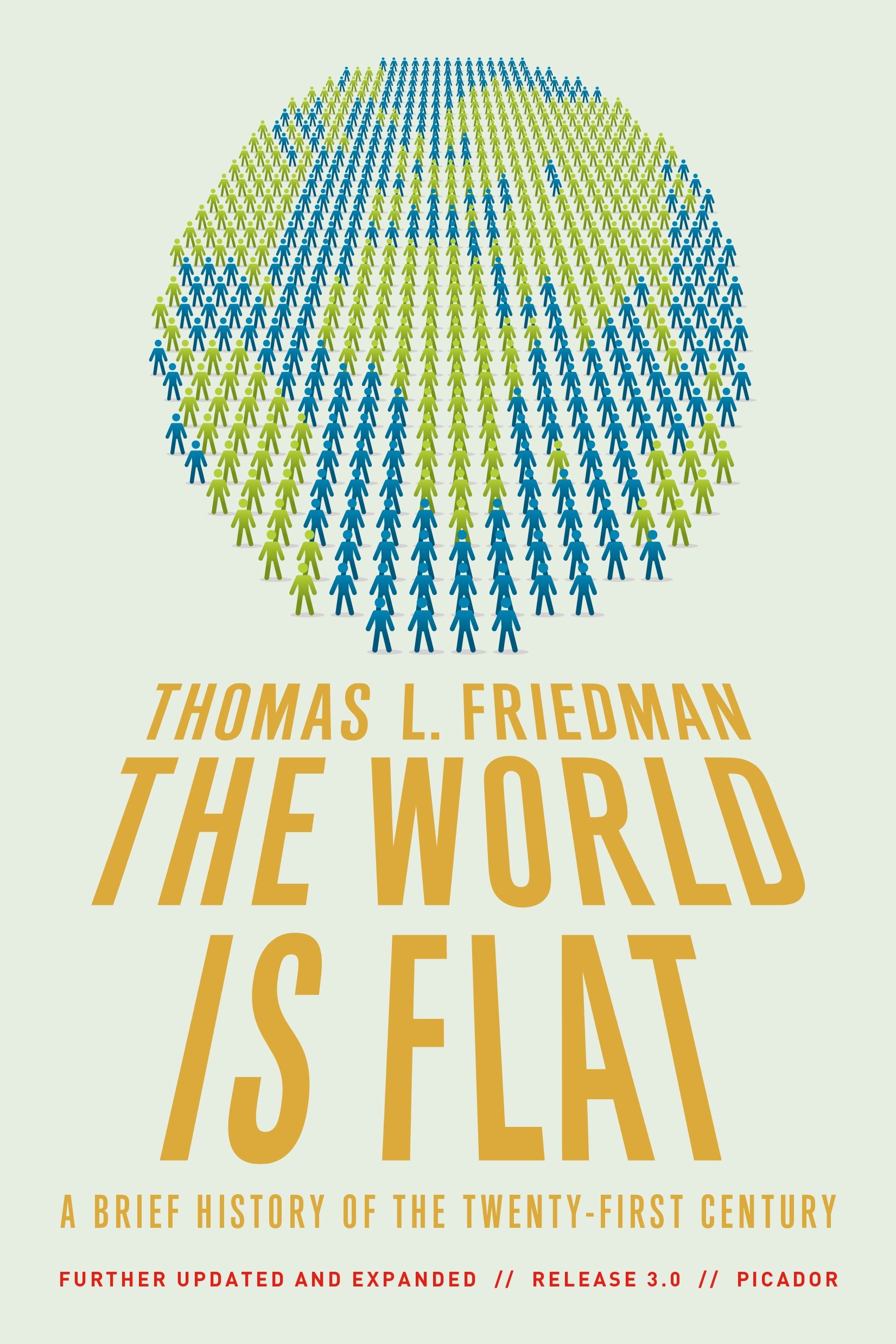
The World Is Flat: Chapters 10–11
New York Times columnist Thomas Friedman explores the complexities of globalization in the twenty-first century.
Here are links to our lists for the book: Chapters 1–2, Chapters 3–4, Chapters 5–9, Chapters 10–11, Chapter 13–Conclusion
40 words
33 learners
Learn words with Flashcards and other activities
Definition First

Other learning activities
Full list of words from this list:
-
decisive
forming or having the nature of a turning point or crisisBut at the end of the day, countries that preserve their green spaces are much more likely to preserve and attract the knowledge workers—who are mobile, have choices, and can make the decisive difference in turning a developing economy into a developed one.
-
privatization
changing something from state to individual ownershipThey pushed their countries into more export-oriented, free-market strategies—based on privatization of state companies, deregulation of financial markets, currency adjustments, foreign direct investment, shrinking subsidies, lowering of protectionist tariff barriers, and introduction of more flexible labor laws—from the top down without ever really asking the people.
-
ideology
an orientation that characterizes the thinking of a groupHow many people do you suppose Deng Xiaoping consulted before he declared, “To get rich is glorious,” and uncorked the Chinese economy, or when he dismissed those who questioned China’s move from communism to free markets by saying that what mattered was jobs and incomes, not ideology? Deng tossed over decades of Communist ideology with one sentence: “Black cat, white cat, all that matters is that it catches mice.”
-
teeming
abundantly filled with especially living thingsTheir neighborhood is a big teeming market, made up of small shops and one-room factories, interspersed with Stanley Kaplan SAT prep schools and engineering colleges.
-
poverty
the state of having little or no money and possessionsEgypt guarantees all college graduates a job each year, and it has been mired in poverty with a slow-growing economy for fifty years.
-
abscond
run away, often taking something or somebody alongFaced with a 10-year-long process of going through bankruptcy, Avik absconds, leaving his workers, the bank, and the tax agency with nothing.
-
collateral
a security pledged for the repayment of a loanIn the United Kingdom, laws on collateral and bankruptcy give creditors strong powers to recover their money if a debtor defaults.
-
onerous
burdensome or difficult to endureThe rich and the well-connected just buy or hustle their way around onerous regulations.
-
austerity
excessive sternnessIn a quite unusual development, the government, the main trade unions, farmers, and industrialists came together and agreed on a program of fiscal austerity, slashing corporate taxes to 12.5 percent (far below the rest of Europe), moderating wages and prices, and aggressively courting foreign investment.
-
tenacity
persistent determinationHe argues that although climate, natural resources, and geography all help to explain why some countries are able to make the leap to industrialization and others are not, the key factor is actually a country’s cultural endowments, particularly the degree to which it has internalized the values of hard work, thrift, honesty, patience, and tenacity, as well as the degree to which it is open to change, new technology, and equality for women.
-
salient
conspicuous, prominent, or importantHarrison argues that a society maintains cultural continuity through a variety of instruments and institutions “that transmit its values and attitudes from generation to generation [through] child-rearing, education, the media, and leadership,” as well as religion, which may be the most salient of all.
-
solidarity
a union of interests or purposes among members of a groupBy that I mean, to what degree is there a sense of national solidarity and a focus on development, to what degree is there trust within the society for strangers to collaborate together, and to what degree are the elites in the country concerned with the masses and ready to invest at home, or are they indifferent to their own poor and more interested in investing abroad?
-
anathema
a formal ecclesiastical curse accompanied by excommunicationTribal culture and thinking still dominate in many Arab countries, and the tribal mind-set is also anathema to collaboration.
-
motto
a favorite saying of a sect or political groupWhat is the motto of the tribalist? “Me and my brother against my cousin; me, my brother, and my cousin against the outsider.”
-
infidel
a person who does not acknowledge your godThey had an ideology of accusing others of being infidels and giving themselves a free hand to kill them, be it Westerners—who, according to them, ought to be kicked out of the Arabian Peninsula—or the Muslim believer who does not follow their path.
-
laissez faire
a doctrine that government should not interfere in commerceChina began its astounding commercial and industrial takeoff only when Mao Zedong’s odiously intolerant form of communism was scrapped in favor of what might be called totalitarian laissez-faire
-
pragmatism
the doctrine that practical consequences determine valueChina during the Cultural Revolution seemed like a nation in the grip of a culture of ideological madness. China today is a synonym for pragmatism.
-
venal
capable of being corruptedAnd some countries simply have venal elites, who use their time in office to line their pockets and then invest those riches in Swiss real estate.
-
constituency
the body of voters who elect a representative for their areaSo just when Mexico needs to summon all its will and energy for reform retail on the micro level, it has to go through the much slower, albeit more legitimate, democratic process of constituency building.
-
aggregate
gather in a mass, sum, or wholeIn other words, any Mexican president who wants to make changes has to aggregate so many more interest groups—like herding cats—to implement a reform than his autocratic predecessors, who could have done it by fiat.
-
reform
a campaign aimed to correct abuses or malpracticesMexico got itself on the right track with reform wholesale, but then, for a lot of tangible and intangible reasons, it just sat there and reform retail stalled.
-
mitigate
lessen or to try to lessen the seriousness or extent ofOf course, there are costs to this growth as well—in terms of environment, social cohesion, and economic equality, which governments need to monitor and mitigate—but let’s stop downplaying the economic benefits, and let’s stop pretending that the anti-globalization advocates have any realistic strategy for bringing as many people out of poverty as quickly—if at all.
-
malign
evil or harmful in nature or influenceAs the driving force of the world economy since the mid-1970s, globalization has become a lodestone for a wide-ranging attack across a large expanse of the developing world for its alleged malign consequences.
-
impact
a forceful consequence; a strong effectReduced to its essentials, the attack posits the impact of globalization to be economic stagnation, deindustrialization, economic destabilization and growing inequality.
-
nascent
being born or beginningAfter a stringent regime of “autarky and command and control economy,” from 1956 to 1975, India started on a slow path of reintegration into the world economy, albeit in nascent form.
-
coincide
happen simultaneouslyInterestingly, India’s reintegration coincides with the onset of the larger process of globalization.
-
paradigm
the generally accepted perspective of a disciplineNot until 1991 did India, amidst enormous economic crisis, make a paradigm shift to liberalization, though still limited.
-
derisive
expressing contempt or ridiculeIndia’s rate of growth from 1975 to 2007 has been over 5.5 percent, compared to the derisively termed “Hindu” rate of growth of 3.4 percent over the period 1956 to 1975, and especially to the pathetic 2.6 percent over the decade prior to the nascent liberalization in 1975.
-
inveterate
in a habitual and longstanding mannerIt has indeed transformed a country that had been mocked as “the sick man of Asia”—an inveterate supplicant for foreign aid—into a credible contender for a major role in the balance of power in Asia.
-
specter
a mental representation of some haunting experienceSimilarly, far from the specter of deindustrialization held out by the critics, foreign imports have not swamped Indian industry after tariffs were lowered as part of India’s reintegration into the world economy.
-
critique
a serious examination and judgment of somethingIndeed, the persistence of poverty for massive numbers, inherited from the past, underscores the passion that goes into critiques of globalization.
-
stagnation
a state of inactivityHowever, the conclusion that flows from a comparative analysis of the trends since the beginning of liberalization in 1975—when set against the condition prior to it, of staggeringly high poverty and economic stagnation—is different.
-
facilitate
make easierHigher rates of economic growth, facilitated by periodic doses of liberalization, pushed forward poverty reduction.
-
implication
a meaning that is not expressly stated but can be inferredThe policy implication therefore is that more, not less, liberalization fosters and sustains rapid economic growth.
-
disseminate
cause to become widely knownWhen, as a result of the flattening of the world, so many people have so much connectivity, and so many people have access to low-cost tools of innovation, and so many people are able to tap into each other’s markets, workforces, brainpower, and ideas to discover and invent new things—and then quickly disseminate them around the globe—well, then, whatever can be done will be done.
-
niche
a position well suited to the person who occupies itGhandour returned home and saw a niche business he thought he could develop: He and an American cofounder, William Kingson, raised some money and in 1982 started a mini-Federal Express to do parcel delivery for the Middle East.
-
interdisciplinary
drawing from two or more fields of studyProducts get worked on in parallel by all departments at once—design, hardware, software—in endless rounds of interdisciplinary design reviews.
-
ambitious
having a strong desire for success or achievementThe historical way of developing products just doesn’t work when you’re as ambitious as we are
-
inkling
a slight suggestion or vague understandingGoing to India gave me an inkling that the world was flat, but only when I went back to my roots and spoke to my friends from Minnesota did I realize just how flat.
-
commodity
any good that can be bought and soldWhen everything is the same and supply is plentiful, said Greer, clients have too many choices and no basis on which to make the right choice. And when that happens, you’re a commodity.
Created on Mon Feb 01 20:14:23 EST 2016
(updated Thu Sep 20 12:24:48 EDT 2018)
Sign up now (it’s free!)
Whether you’re a teacher or a learner,
Vocabulary.com can put you or your class
on the path to systematic vocabulary improvement.