Stamped: Sections 2–3
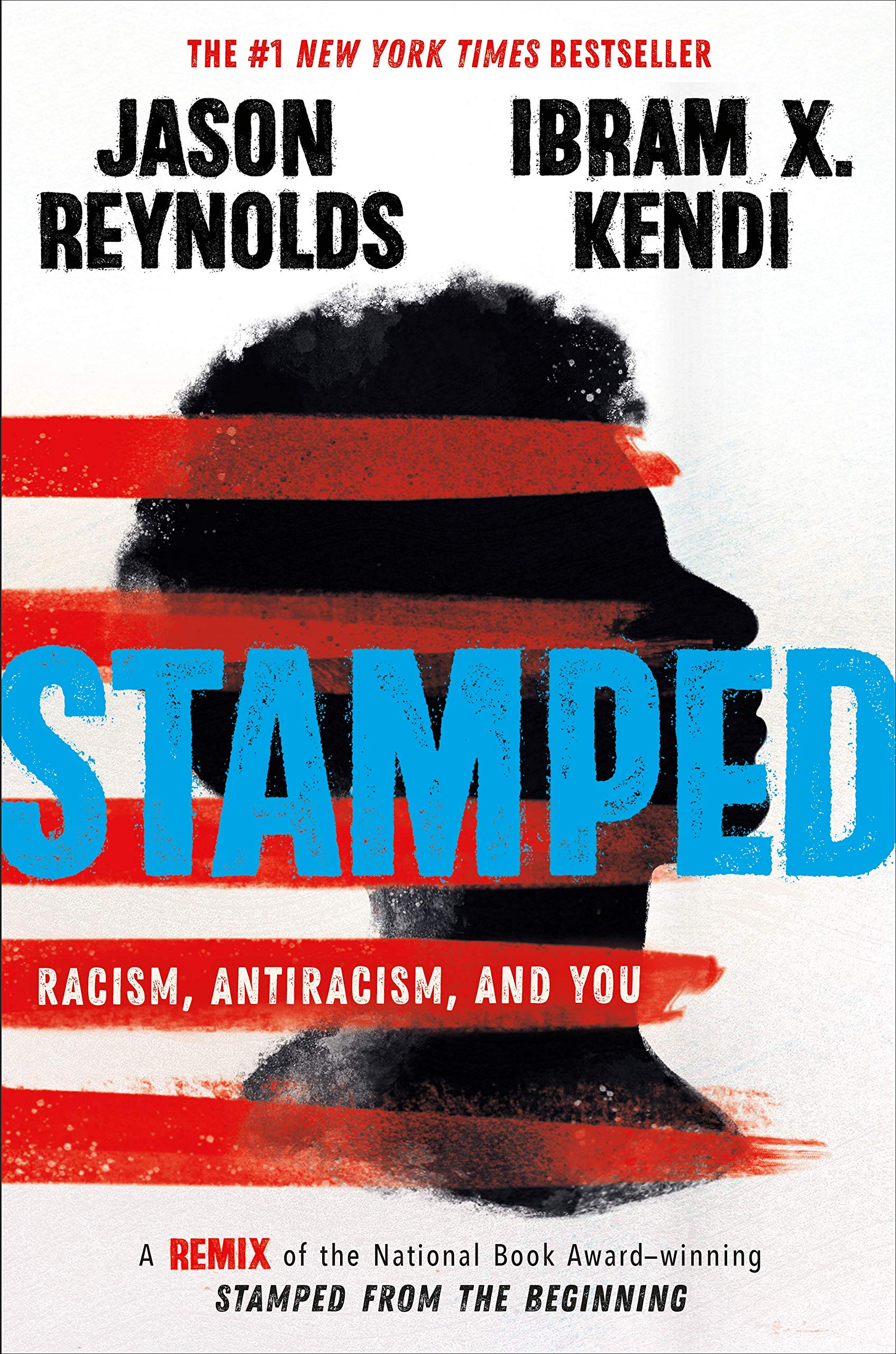
This bestselling book traces the history of racist ideas and racial injustice in the United States.
Here are links to our lists for the book: Section 1, Sections 2–3, Section 4, Section 5
40 words
934 learners
Learn words with Flashcards and other activities
Definition First

Other learning activities
Full list of words from this list:
-
enlightened
having knowledge and spiritual insightBut to be enlightened just means to be informed. To be free from ignorance. So, this new movement, the Enlightenment, was megaphoning the fact that there was a new generation, a new era that knew more.
-
grapple
work hard to come to terms with or deal with somethingAs Thomas Jefferson grew up, he studied law to grapple with antiracist thought (yes, the slave owner was studying antiracism).
-
underhanded
marked by deceptionLike, when people say, “You’re cute...for a (insert physical attribute that shouldn’t be used as an insult but is definitely used as an insult because it doesn’t fit with the strange and narrow European standard of beauty).” It’s underhanded and still doesn’t recognize you for you.
-
encompass
include in scopeWas he talking about an all-encompassing freedom or just America being free from England?
-
devious
characterized by insincerity or deceitHe didn’t intend to publish these notes widely, but a small devious printer did so without his permission.
-
vice
a specific form of evildoingBlack people—slaves—started to get free. Runaways. And abolitionists urged the newly freed people to go to church regularly, learn to speak “proper” English, learn math, adopt trades, get married, stay away from vices (smoking and drinking), and basically live what they would consider to be respectable lives.
-
insurrection
organized opposition to authorityEspecially as slaves, many of whom were still inspired by the Haitian Revolution, were continuing to attempt insurrection.
-
cynical
believing the worst of human nature and motivesBut two cynical slaves—snitches—begging for their master’s favor, betrayed what would have been the largest slave revolt in the history of North America, with as many as fifty thousand rebels joining in from as far away as Norfolk, Virginia.
-
manifesto
a public declaration of intentionsHe started an organization called the American Colonization Society (ACS) and wrote the manifesto for it, outlining how free Blacks would need to be trained to take care of themselves so that they could go back to Africa and take care of their motherland.
-
reap
get or deriveBlack people didn’t want to go “back” to a place they’d never known. They’d built America as slaves and wanted to reap the benefits of their labor as free people.
-
domestic
of concern to or concerning the internal affairs of a nationThe goal was to stop the import of people from Africa and the Caribbean into America, and fine illegal slave traders. (Yes!) Instead, the act turned out to be paper thin and did nothing to stop domestic slavery or the international slave trade.
-
premise
a statement that is held to be trueIt was supposed to be a bubble (pronounced cage) for Blacks, where they could be safe, and where White people could be safe from their potential response to, I don’t know, the whole slavery thing. Colonization within the country, which was like Black people being banished to the basement of the house they’d built under the premise that it was better than sleeping in the street.
-
swath
a path or strip (also figurative)The northern part of that swath of Louisiana was cut into what became the Missouri Territory.
-
conundrum
a difficult problemIts location—the Missouri part—was almost right smack in the middle of the country, meaning there was a geographical conundrum to be dealt with: Would Missouri be considered a slave state or a free state?
-
leverage
strategic advantage; power to act effectivelySoutherners saw this as a trick to limit the political power of southern agriculture and mess with their money and leverage in the House of Representatives, and therefore their power.
-
exploited
taken advantage ofDrained of their abilities and knowledge of growing and tending crops, exploited for their physical might and creativity when it came to building structures and making meals, stripped of their reproductive agency, stripped of their religions and languages, stripped of their dignity. American soil sopping with Black blood, their DNA now literally woven into the fibers of this land.
-
staggering
so surprisingly impressive as to stun or overwhelmIn 1826, he held around two hundred people as property and he was about $100,000 in debt (about $2.5 million today), an amount so staggering that he knew that once he died, everything—and everyone—would be sold.
-
lucid
capable of thinking in a clear and consistent mannerIn his earliest childhood memory and in his final lucid moment, Thomas Jefferson lay there dying—death being the ultimate equalizer—in the comfort of slavery.
-
gurney
a metal stretcher with wheelsA football player. I’d watched him truck people on the field, watched him put parents’ children on gurneys all in the name of school pride and athletic victory.
-
entwine
tie or link togetherBoth Thomas Jefferson and John Adams (President #2, before Jefferson) died on July 4, 1826, on the fiftieth anniversary of the Declaration of Independence. Instead of people seeing this double death as a sign that the old ways of doing things were out of style—literally dead—people looked at their deaths as some kind of encouragement to carry out their legacies. It just so happens those legacies were deeply entwined with slavery.
-
immerse
devote fully toBoston had grown to nearly sixty thousand people and was fully immersed in New England’s industrial revolution, which was now running on the wheels of southern cotton.
-
firebrand
someone who deliberately foments troubleThe ACS had asked a twenty-three-year-old firebrand named William Lloyd Garrison to give their Fourth of July address in 1829.
-
appeal
earnest or urgent requestWalker was a Black man, and he had written a pamphlet, An Appeal to the Coloured Citizens of the World, arguing against the idea that Black people were made to serve White people. Walker’s Appeal spread, Garrison read it, and eventually the two men met.
-
predecessor
one who goes before you in timeGarrison was influenced greatly by Walker’s ideas and carried them on, spreading them by doing what everyone had done before him: Literature. Writing. Language. The only difference was that Garrison’s predecessors in propaganda always spread damaging information.
-
propaganda
information that is spread to promote some causeGarrison was influenced greatly by Walker’s ideas and carried them on, spreading them by doing what everyone had done before him: Literature. Writing. Language. The only difference was that Garrison’s predecessors in propaganda always spread damaging information.
-
incremental
increasing gradually by regular degrees or additionsIn his first editorial piece, Garrison changed perspectives from gradual abolition to immediate abolition. Meaning, he used to believe that freedom was incremental. A little bit at a time.
-
yoke
an oppressive powerAgain, slaveholders got scared. Tightened the yoke.
-
docile
willing to be taught or led or supervised or directedMoral of the story: We all must be slaves...to God. And since docile Black people made the best slaves (to man), they made the best Christians.
-
domineering
tending to rule in a cruel mannerAnd since domineering Whites made the worst slaves, they made the worst Christians.
-
bigotry
intolerance and prejudiceDespite critiques by intellectual giants like William Lloyd Garrison, who pointed out in the Liberator the religious bigotry in the book and Stowe’s endorsement of colonization, and by Frederick Douglass—from an assimilationist angle—who followed up by assuring Whites that the Black man, unlike the Native, loves civilization and therefore would never go back to Africa (as if Africa were uncivilized), Uncle Tom’s Cabin exploded and became the biggest book of its time.
-
endorsement
the act of approvingDespite critiques by intellectual giants like William Lloyd Garrison, who pointed out in the Liberator the religious bigotry in the book and Stowe’s endorsement of colonization, and by Frederick Douglass—from an assimilationist angle—who followed up by assuring Whites that the Black man, unlike the Native, loves civilization and therefore would never go back to Africa (as if Africa were uncivilized), Uncle Tom’s Cabin exploded and became the biggest book of its time.
-
bolster
support and strengthenOn one hand, he wanted slavery gone. Black people liked that. On another hand, he didn’t think Black people should necessarily have equal rights. Racists loved that. And then, on a third hand (a foot, maybe?), he argued that the end of slavery would bolster the poor White economy, which poor White people loved.
-
secession
formal separation from an alliance or federationThe secession, which just means to withdraw from being a member of, not to be confused with succession, meaning a line of people sharing a role one after the other (like a succession of slave owners), not to be confused with success, which means to win (because that didn’t happen), started with South Carolina. They left the Union.
-
repeal
cancel officiallyBut by the summer of 1862, the slave act had been repealed and a bill passed that declared all Confederate-owned Africans who escaped to Union lines or who resided in territories occupied by the Union to be “forever free of their servitude.”
-
bastion
a group that defends a principleBecause let’s not pretend that life in the North, life across Union lines, was immediately sweet. It wasn’t some bastion of peace and acceptance. The Union believed most of the same hype about Black people as the Confederacy.
-
ploy
a maneuver in a game, conversation, or situationThree weeks after Lincoln’s death, William Lloyd Garrison, who had been steady on his antiracist journey—producing antiracist literature in the Liberator, including his critiques of Lincoln’s racist political ploys, and his work for the American Anti-Slavery Society—called it quits.
-
emancipation
freeing someone from the control of anotherHe believed that because emancipation was imminent, his job as an abolitionist was done.
-
imminent
close in time; about to occurHe believed that because emancipation was imminent, his job as an abolitionist was done.
-
embolden
give encouragement toAll this was under President Johnson’s watch. He emboldened the Ku Klux Klan, allowing them to wreck Black lives with no consequence and enshrine those racist codes and laws.
-
relentless
not willing or able to stop or yieldSome people, like Pennsylvania congressman Thaddeus Stevens, even fought for the redistribution of land to award former slaves forty acres to work for themselves. But the arguments against this plan were relentless and racist, presented in this strange way that makes the freed Black person seem stupid.
Created on Mon Jul 13 12:48:29 EDT 2020
(updated Thu Jul 16 09:15:15 EDT 2020)
Sign up now (it’s free!)
Whether you’re a teacher or a learner,
Vocabulary.com can put you or your class
on the path to systematic vocabulary improvement.