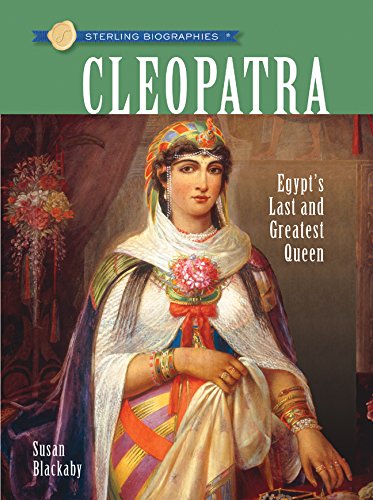
Cleopatra: Introduction–Chapter 3
This biography explores the ascension and reign of Cleopatra, the ancient Egyptian pharaoh.
Here are links to our lists for the book: Introduction–Chapter 3, Chapters 4–6, Chapters 7–9, Chapters 10–12, Chapters 13–15
20 words
299 learners
Learn words with Flashcards and other activities
Definition First

Other learning activities
Full list of words from this list:
-
rash
marked by defiant disregard for danger or consequencesCleopatra—daring, clever, smart, rich, determined, and rash—intended to win at any cost.
-
dynasty
a sequence of powerful leaders in the same familyShe joined a dynasty that had ruled Egypt for more than 250 years.
-
empire
a group of countries under a single authorityThey rose to power after the death of Alexander the Great brilliant military leader who had established an empire that extended eastward from Greece to India.
-
remarkable
worthy of noticeHe knew about Alexander’s dream to build the most remarkable city in the world and saw to it that this dream was fulfilled.
-
reign
the period during which a monarch is in powerHowever, from the beginning of their reign, the Ptolemies combined their Greek heritage with Egyptian customs that could be traced back thousands of years.
-
Ptolemy I
the king of Egypt who founded the Macedonian dynasty in Egypt; a close friend and general of Alexander the Great who took charge of Egypt after Alexander died (circa 367-285 BC)King Ptolemy I called himself the pharaoh, in keeping with the Egyptian kings and queens who ruled before him.
-
endurance
a state of surviving; remaining aliveThe strength of Egypt as a nation and its endurance as a society can be traced to the key role the pharaoh played as a direct link to the gods.
-
patron
someone who supports or champions somethingThanks to these patrons, Cleopatra had access to an enormous body of knowledge for reading and research.
-
political
of or relating to the profession of governingShe studied history written by Herodotus and Thucydides, which included political and military events of the past, and memorized the speeches of Demosthenes to learn the fine points of public speaking and debate.
-
republic
a political system in which power lies in a body of citizensAlthough Egypt was isolated by the surrounding desert and maintained its political independence, the Ptolemies had come to rely on the vast power of the Roman Republic to provide support and to help keep order.
-
bribe
payment made to corrupt a person in a position of trustCleopatra saw for herself the power plays, secret pacts, broken promises, bribes, and betrayals that marked her father’s rule.
-
maintain
keep in a certain state, position, or activityIn any event, Cleopatra knew about Berenice’s murdering ways, and she understood that people would do anything to achieve and maintain power.
-
successor
a person who inherits some title or officeHe named fourteen-year-old Cleopatra and her six-year-old brother Ptolemy XIII as his successors to make it clear that the dynasty would continue.
-
ruthless
without mercy or pityCloser to home, Cleopatra needed to be on guard for ruthless enemies within her own family.
-
papyrus
tall sedge of the Nile valley yielding fiberAt the beginning of 49 BCE, papyrus documents and decrees listed Ptolemy XIII and Cleopatra as joint rulers.
-
ally
a friendly nationIn October, the Roman Senate declared Ptolemy to be “a friend and ally” of Rome.
-
civil
of or occurring between or among citizens of the stateFor Cleopatra, luck came in the form of the civil war being waged between Caesar and Pompey, the two generals who now ruled Rome."Civil" also means "not rude"--this would not fit a description of a war, but it fits how Caesar would have wanted to conduct the war against Pompey, since "he valued a fair fight" and did not appreciate the cowardly murder of his rival and son-in-law.
-
resource
a new or reserve supply that can be drawn upon when neededThanks to the power struggle between Ptolemy and Cleopatra, resources and supplies were already running low.
-
dispute
a disagreement or argument about something importantHe needed to settle the dispute between Ptolemy and Cleopatra so that he could tap into their resources.
-
captivating
attracting and holding interest as if by a spellThe historian Plutarch wrote that “interaction with [Cleopatra] was captivating, and her appearance, along with her persuasiveness in discussion and her character that accompanied all interaction, was stimulating.”The adjective sounds like part of a positive description of Cleopatra, but the word "captivating" has a negative connotation that's connected to the Latin "captivus" which means "prisoner." Change the participial adjectives "captivating" and "stimulating" back to their original verbs to get a clearer picture of how Cleopatra used her powers of beauty and intelligence to capture men in order to stir them into action for her.
Created on Wed Jul 30 21:45:00 EDT 2014
(updated Tue Apr 09 16:25:15 EDT 2019)
Sign up now (it’s free!)
Whether you’re a teacher or a learner,
Vocabulary.com can put you or your class
on the path to systematic vocabulary improvement.