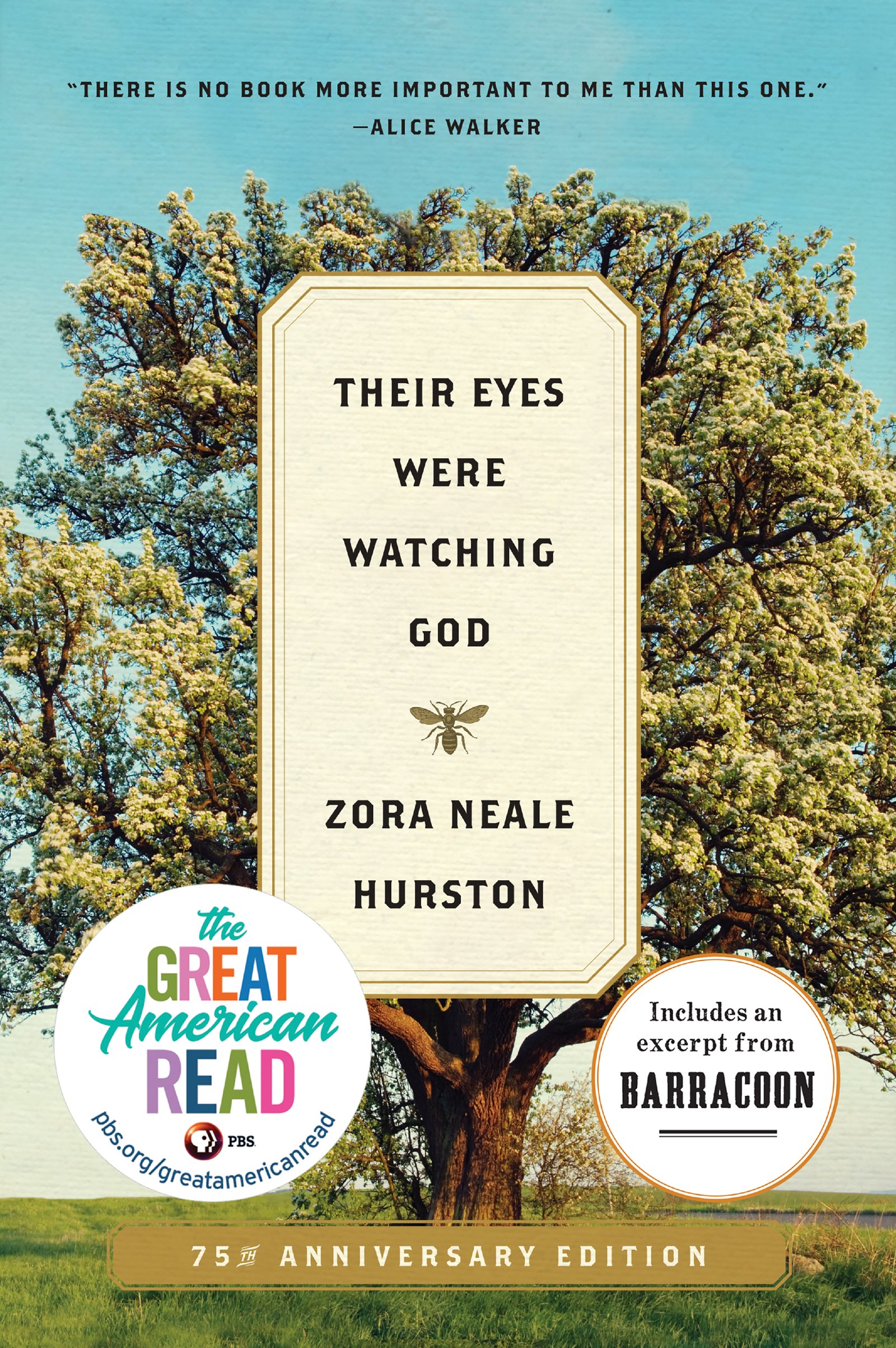
Their Eyes Were Watching God: Foreword and Afterword
Considered a seminal work of African-American literature, Their Eyes Were Watching God is notable for its strong and independent female protagonist.
Here are links to our lists for the novel: Foreword and Afterword, Chapters 1–3, Chapters 4–6, Chapters 7–14, Chapters 15–20
15 words
5082 learners
Learn words with Flashcards and other activities
Definition First

Other learning activities
Full list of words from this list:
-
resilient
recovering readily from adversity, depression, or the likeAt first it might seem contradictory that a work whose central character is the remarkably resolute and resilient Janie Crawford should start with a dictum about “the life of men.”
-
dictum
an authoritative declarationAt first it might seem contradictory that a work whose central character is the remarkably resolute and resilient Janie Crawford should start with a dictum about “the life of men.”
-
diaspora
the dispersion of something that was originally localizedAnd so when I blurt out my favorite piece of Hurston trivia, I do it partially out of pride for her association with Haiti but I also do it heeding Alice Walker’s extremely wise advice in her foreword to Robert E. Hemenway’s literary biography of Hurston: “We are a People.” (And I include all the international peoples of the African diaspora in this category.)
-
nuanced
conveying a subtle difference in tone, meaning, or attitudeSome of us thought that Hurston tried to envision characters who are neither too holy nor too evil. Her men and women are extremely nuanced, reflecting human strengths as well as frailties.
-
censure
harsh criticism or disapprovalAlong with the classic conflict between an individual’s wishes and a community’s censure, there are many contemporary motifs in this novel, events that could have been easily plucked out of early-twenty-first-century headlines: loveless marriages; verbal and physical abuse; mercy killing, or a killing in self-defense, depending on how you interpret it; forbidden love; a public and passionate affair between a younger man and an older woman from different stations in life.
-
motif
a recurrent element in a literary or artistic workAlong with the classic conflict between an individual’s wishes and a community’s censure, there are many contemporary motifs in this novel, events that could have been easily plucked out of early-twenty-first-century headlines: loveless marriages; verbal and physical abuse; mercy killing, or a killing in self-defense, depending on how you interpret it; forbidden love; a public and passionate affair between a younger man and an older woman from different stations in life.
-
affinity
inherent resemblance between persons or thingsThe craft of Alice Walker, Gayl Jones, Gloria Naylor, and Toni Cade Bambara bears, in markedly different ways, strong affinities with Hurston’s.
-
vernacular
the everyday speech of the peopleThis use of the vernacular became the fundamental framework for all but one of her novels and is particularly effective in her classic work Their Eyes Were Watching God, published in 1937, which is more closely related to Henry James’s The Portrait of a Lady and Jean Toomer’s Cane than to Langston Hughes’s and Richard Wright’s proletarian literature, so popular in the Depression.
-
proletarian
belonging to or characteristic of the working classThis use of the vernacular became the fundamental framework for all but one of her novels and is particularly effective in her classic work Their Eyes Were Watching God, published in 1937, which is more closely related to Henry James’s The Portrait of a Lady and Jean Toomer’s Cane than to Langston Hughes’s and Richard Wright’s proletarian literature, so popular in the Depression.
-
oeuvre
the total output of a writer or artistYet in its concern with the project of finding a voice, with language as an instrument of injury and salvation, of selfhood and empowerment, it suggests many of the themes that inspirit Hurston’s oeuvre as a whole.
-
engender
call forthIt is clear, however, that the loving, diverse, and enthusiastic responses that Hurston’s work engenders today were not shared by several of her influential black male contemporaries.
-
propagation
the spreading of something into new regionsHurston thought this idea degrading, its propagation a trap, and railed against it.
-
synecdoche
using part of something to refer to the whole thingThat which she silences or deletes, similarly, is all that her readership would draw upon to delimit or pigeonhole her life as a synecdoche of “the race problem,” an exceptional part standing for the debased whole.
-
invective
abusive language used to express blame or censureElsewhere she analyzes black “idioms” used by a culture “raised on simile and invective. They know how to call names,” she concludes, then lists some...
-
condescending
characteristic of those who treat others with arroganceNor is she being “cute,” or pandering to a condescending white readership. She is “naming” emotions, as she says, in a language both deeply personal and culturally specific.
Created on Fri Mar 08 13:25:53 EST 2013
(updated Sun Jul 06 22:55:12 EDT 2025)
Sign up now (it’s free!)
Whether you’re a teacher or a learner,
Vocabulary.com can put you or your class
on the path to systematic vocabulary improvement.