inflection
Other forms: inflections
Inflection refers to the ups and downs of a language. Even if you can’t understand Italian yet, the inflection in your professor’s voice should tip you off to whether she's asking a question, giving a command, or making a joke.
What began in the 1500s as a noun of action spelled inflexion has since evolved into inflection, a word with grammatical connotation. Inflection most often refers to the pitch and tone patterns in a person’s speech: where the voice rises and falls. But inflection also describes a departure from a normal or straight course. When you change, or bend, the course of a soccer ball by bouncing it off another person, that’s an example of inflection.
-
the patterns of stress and intonation in a languagesynonyms: prosodytypes:caesuraa break or pause (usually for sense) in the middle of a verse lineenjambement, enjambmentthe continuation of a syntactic unit from one line of verse into the next line without a pauseaccent, emphasis, stressthe relative prominence of a syllable or musical note (especially with regard to stress or pitch)intonation patternintonations characteristic of questions and requests and statementssingsonga regular and monotonous rising and falling intonationaccentuationthe use or application of an accent; the relative prominence of syllables in a phrase or utterancesentence stressthe distribution of stresses within a sentencetype of:delivery, manner of speaking, speechyour characteristic style or manner of expressing yourself orally
-
a manner of speaking in which the loudness or pitch or tone of the voice is modifiedsynonyms: modulationtype of:delivery, manner of speaking, speechyour characteristic style or manner of expressing yourself orally
-
a change in the form of a word (usually by adding a suffix) to indicate a change in its grammatical functionsynonyms: inflexiontypes:conjugationthe inflection of verbsdeclensionthe inflection of nouns and pronouns and adjectives in Indo-European languagesparadigmsystematic arrangement of all the inflected forms of a wordtype of:grammatical relationa linguistic relation established by grammar
-
deviation from a straight or normal course
- MLA
- APA
- Chicago
Vocabulary lists containing inflection

In the 1940s, a working class African-American family in Chicago must decide how to best spend a ten-thousand dollar insurance payout.
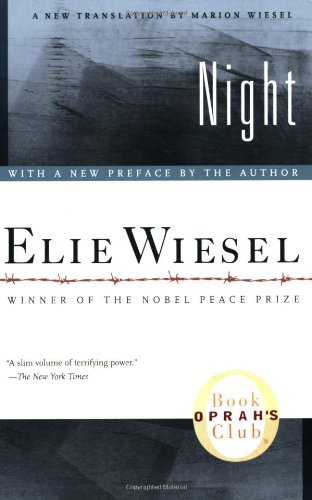
In this unflinching memoir, Elie Wiesel describes his experience as a young man imprisoned in a Nazi concentration camp during the Holocaust. 2006 Hill and Wang edition.

Learn these challenging words that you'll encounter in literature, articles, and textbooks.